
What Leads to Clogged Gutters and the Safest Ways to Clear Them
The most common causes of gutter blockages are leaves, roof debris, pests, and poor water flow. These problems stop rainwater from moving through your system. When water cannot drain, it spills over the sides and can damage your roof, siding, and foundation. The good news is that most clogs can be cleared with simple tools and regular gutter maintenance.
Common Symptoms of Blocked Gutters
Gutter clogs often show clear warning signs. You may notice water pouring over the edge during rain. You might see sagging sections or stains on the siding. In some cases, plants even start growing inside the gutters.
- Water spilling over during storms
- Gutters pulling away from the house
- Dark streaks on siding
- Pools of water near the foundation
- Nesting birds or insects
If you spot one or more of these signs, it is time to inspect your gutters.
Likely Causes of Gutter Blockages
Clogs do not happen without a reason. They build up over time. Here are the most common causes.
Leaves and twigs. Trees drop debris throughout the year. Wind blows it onto the roof, and rain washes it into the gutters.
Roof shingle grit. As shingles age, they shed small granules. These granules collect in the gutter and form thick sludge.
Animal nests. Birds, squirrels, and rodents look for safe places to build nests. Gutters are easy targets.
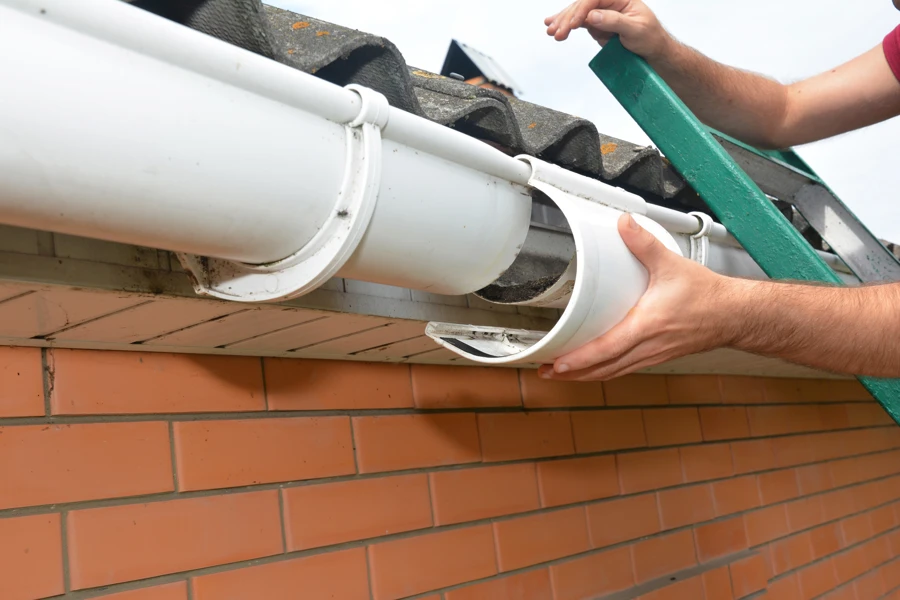
Improper slope. Gutters should slightly slope toward the downspouts. If they are level or tilted the wrong way, water sits and debris settles.
Downspout clogs. Even if the gutter looks clear, a blocked downspout can trap water and cause backups.
What to Check First
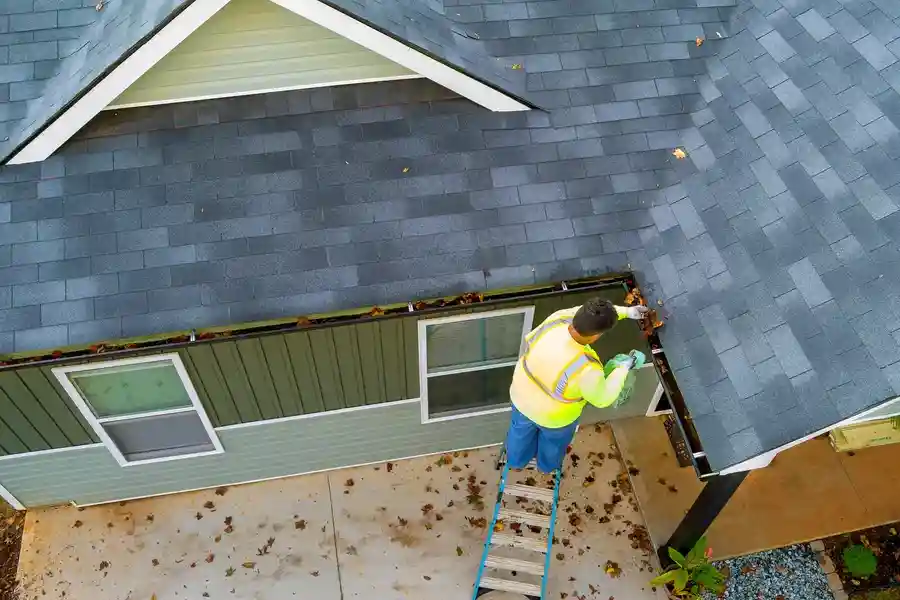
Before you start cleaning, do a simple visual check. Use a sturdy ladder and work with a partner if possible. Look inside the gutter for standing water or compacted debris. Then check the downspout opening.
- Remove large debris by hand while wearing gloves.
- Flush the gutter with a garden hose.
- Watch how the water flows toward the downspout.
- If water backs up, check the downspout for clogs.
A plumber’s snake can help break apart downspout clogs. In some cases, spraying water upward from the bottom clears the blockage.
Safe Fixes Versus Professional Repairs
Many minor clogs can be handled with basic tools. Gloves, a ladder, and a hose are often enough. Regular gutter maintenance prevents heavy buildup and keeps the system flowing.
But some problems need more than basic cleaning. If the gutters are loose, badly sagging, or rusted through, repairs may be required. If the slope is wrong, sections might need to be rehung and adjusted. Working on a tall roof can also be risky without proper safety gear.
Persistent overflow may point to hidden damage behind the fascia board. Structural issues should be handled by trained crews.
Prevention Tips That Save Time and Money
The best way to fix gutter blockages is to stop them from forming in the first place. A simple plan makes a big difference.
- Clean gutters at least twice a year
- Trim tree branches away from the roof
- Install gutter guards if debris is heavy
- Check for loose fasteners after storms
- Flush downspouts during routine gutter maintenance
Spring and fall are the most common times for service. Homes surrounded by trees may need extra attention. Staying consistent reduces the risk of water damage and costly repairs.
When to Call for Help
If your gutters clog often, sag, or leak at the seams, it may be time for expert service. Homes in Brentwood, NY can face heavy rain and seasonal debris that strain gutter systems. Waiting too long can lead to roof rot, basement moisture, and foundation cracks.
At Innovation Gutters Inc, we help homeowners in Brentwood, NY stay ahead of costly water damage with dependable gutter maintenance and repairs. If you are dealing with clogged or overflowing gutters, call us at (631) 579-0796. We will inspect your system, clear blockages, and make sure water flows away from your home the right way.